

Business Ownership Coach | Investor Financing Podcast is the lens through which I break down commercial financing decisions that actually matter when buying or improving property. One of the most frequent questions I get is about loan-to-cost, especially with SBA 504 loans, and how that compares to the SBA 7(a) option. This guide walks through the practical rules, common gotchas, and the real-world tradeoffs you need to weigh when structuring a deal.
Understanding loan-to-cost for SBA 504

SBA 504 financing is designed to help small businesses purchase fixed assets like owner-occupied real estate and equipment. At its baseline, the program allows up to 90% loan-to-cost (LTC) on a total project. That means the SBA-backed portion can finance as much as 90% of eligible project costs, which is attractive if you want high leverage.
However, the headline number comes with important exceptions. The program applies haircut rules for certain riskier borrower or property profiles. Those haircuts reduce the available LTC and change the leverage math.
Startups and special purpose properties: the 5% haircuts

Photo by Giorgio Tomassetti on Unsplash
Two common scenarios trigger a 5% deduction each on the eligible LTC:
- Startup businesses — if the borrower is a startup, the SBA reduces the LTC by 5%.
- Special purpose properties — properties with a single, limited use like gas stations, car washes, or certain purpose-built facilities are often considered special purpose and also take a 5% haircut.
Those reductions are cumulative. If you are both a startup and buying a special purpose property, you lose 10% of the LTC in total. That means instead of 90% you may only be able to access 80% of total project cost through SBA 504 financing. That change can make a substantial difference to your cash required at closing.
“If it's special purpose you're getting dinged 5% on the LTC and if it's a startup you're getting dinged another 5% … you're then stuck at 80%.”
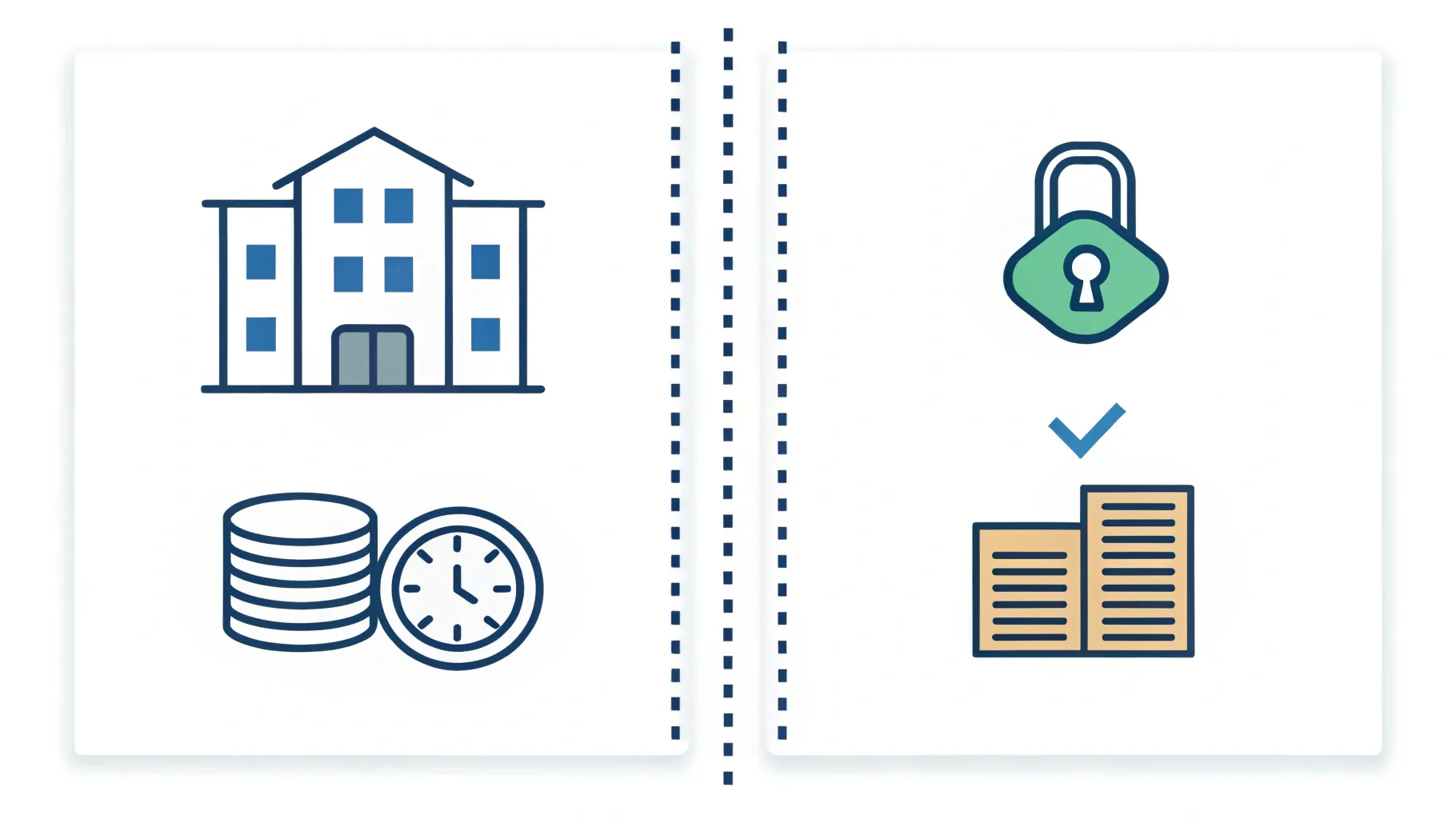
How SBA 504 compares to SBA 7(a)
When that haircut hits a deal, the SBA 7(a) program becomes a compelling alternative. The 7(a) lender evaluates loans differently and often allows higher leverage for the same project — sometimes up to 90% of total project cost — without the startup or special purpose reductions applied in the same way.
Key differences to factor in when comparing the two programs:
- Leverage: 504 can provide excellent leverage but subject to the haircuts. 7(a) can sometimes deliver higher overall LTC depending on the lender and deal.
- Rate structure: 504 typically offers superior fixed-rate terms on the CDC-backed second loan. 7(a) lenders can offer fixed-rate options too, but those rates vary and may be higher at times.
- Prepayment penalties: 504 financing often carries a longer prepayment period on the CDC second loan — usually a 10-year prepayment penalty schedule. 7(a) first-lien debt and its prepayment terms are negotiated directly with the bank, which can be more flexible.
- Underwriting complexity: 7(a) involves a single underwriting process. 504 is inherently two-part because of the CDC and the participating lender, which can add time and cost.
In practice, I often structure a fixed-rate 7(a) option for clients when current bank fixed rates are reasonable. Right now fixed 7(a) rates can fall in the 9% to 9.5% range depending on the lender. Meanwhile, the CDC second loan in a 504 might be closer to 7% (example rate 7.01% as of recent pricing), and the senior piece somewhere in the high 7s or low 8s — producing a preferable blended cost, but at the expense of additional time and a longer prepayment lock.

When a 504 loan is the better choice
There are clear use cases where SBA 504 is typically the right tool:
- Large total project costs: When the project is substantial — for example $12 million to $15 million totals — 504 becomes attractive because the second loan can be very large (commonly up to $5 million, or $5.5 million under 504 Green programs).
- Desire for lower blended fixed rate: If you want a long-term fixed rate and are okay with slower processing and longer prepayment periods, 504’s blended cost can beat a straight 7(a) in many market environments.
- Combining senior debt: 504 allows layering: a senior bank loan paired with the CDC second to finance big projects without requiring excessive owner equity.
Put simply, for bigger deals the structure capability in 504 often outweighs the extra time and paperwork.

How I choose the right product for a deal
Choosing between SBA 504 and 7(a) is rarely a one-size-fits-all decision. My approach when advising business owners is practical and scenario-driven:
- Run the numbers for both structures. Compare LTC, required equity, blended interest rate, and cash flow impacts.
- Assess borrower and property risk flags. Is this a startup or a special purpose asset? Those facts can push the decision toward 7(a).
- Consider timing and complexity. If speed and simplicity are priorities, a single 7(a) underwriting may be preferable.
- Factor in long-term plans. If locking a long-term fixed rate with minimal future refinancing plans matters, 504’s terms may win despite haircuts.
Ultimately, the best outcome is the one that balances leverage, cost, flexibility, and the borrower’s growth plan. There is rarely a strictly better program in every situation; it depends on the deal specifics.

Practical checklist before you apply
- Confirm whether the business is classified as a startup.
- Determine whether the property is special purpose.
- Get preliminary pricing on both 7(a) fixed options and the 504 CDC second.
- Estimate total project cost and compute required owner equity under both programs.
- Decide acceptable prepayment terms for your holding period.
Business Ownership Coach | Investor Financing Podcast represents how I help entrepreneurs align financing with their business strategy. With the right analysis, you can pick the structure that minimizes upfront cash, controls long-term cost, and supports your growth.
When you’re ready to run numbers for a specific deal, use a lender or advisor who will lay out both 7(a) and 504 scenarios side by side so you can see the true tradeoffs before committing.
metoprolol
metoprolol
reglan
reglan
doxycycline hyclate 100 mg cap
doxycycline hyclate 100 mg cap
dutasteride 0.5 mg oral capsule
dutasteride 0.5 mg oral capsule